DnD Game Room Decor: Dice Trays, Towers & Mats (Buy vs DIY)
Updated October 2026 · 3 min read
Metal and resin dice sound satisfying until a rogue roll clatters across the battle mat and scatters your miniatures. Upgrading your rolling surface keeps rolls contained, dampens table noise, and instantly elevates the fantasy aesthetic of game night. Whether you want a compact tray, a dramatic tower, or an easy DIY build, here is how to curate your gaming space.
Dice trays
Compact rims and quiet faux-leather rolls
Octagonal and rectangular trays with padded faux-leather or velvet liners are the gold standard for game night. They give heavy polyhedrals a soft landing while raised walls prevent runaway natural ones from rolling onto the floor. Snapping flat-pack designs are especially practical if you travel to a friend's house for your campaign sessions.
- ✦Snap-corner folding trays lay flat inside your backpack for effortless transport
- ✦Velvet and padded faux-leather bases eliminate the loud clatter of metal dice
- ✦Stiff, walled rims keep wandering d20s from knocking over plastic miniatures
Dice towers
Vertical centerpieces that save table space
When table space is crowded with character sheets, spell cards, and map tiles, dice towers make use of vertical room. Dropping dice down internal baffles guarantees fair, randomized results without requiring wide rolling room. Many designs feature integrated catch trays to make sure your rolls stay contained right where you want them.
- ✦Vertical chutes take up a minimal footprint on tight dining tables
- ✦Internal tumbling steps ensure fully randomized rolls for critical moments
- ✦Cast resin or wood towers double as striking fantasy display pieces between games
Rolling mats
Broad fabric and leather table protection
If you dislike the feeling of rolling inside a small box, broad roll-out mats offer wide table protection with total freedom. A stitched neoprene or supple leather mat shields delicate wood tabletops from dents caused by heavy metal dice. They roll up cleanly after the session ends and store easily in a poster tube or playmat sleeve.
- ✦Provides a soft runway for rolling massive handfuls of rogue sneak attack dice
- ✦Cushioned backing protects fine dining tables from heavy dice dents and scratches
- ✦Rolls up tightly with leather ties or elastic bands for quick clean-up
Diy in an afternoon
Turning picture frames into dice trays
You do not need an entire woodworking workshop to create a personalized, sound-dampening tray. A deep wooden shadowbox or sturdy thrifted picture frame can become a custom rolling box with just adhesive felt and glue. Swapping the backing with patterned fabric or painted cork gives you a functional prop tailored to your favorite character.
- ✦Choose deep frames with at least one inch of depth to keep dice from bouncing out
- ✦Line the base with thick adhesive craft felt or cork for quiet rolls
- ✦Add small silicone or felt bumper pads to the frame base to protect the table
Where it lives on the table
Ideal placement for players and DMs
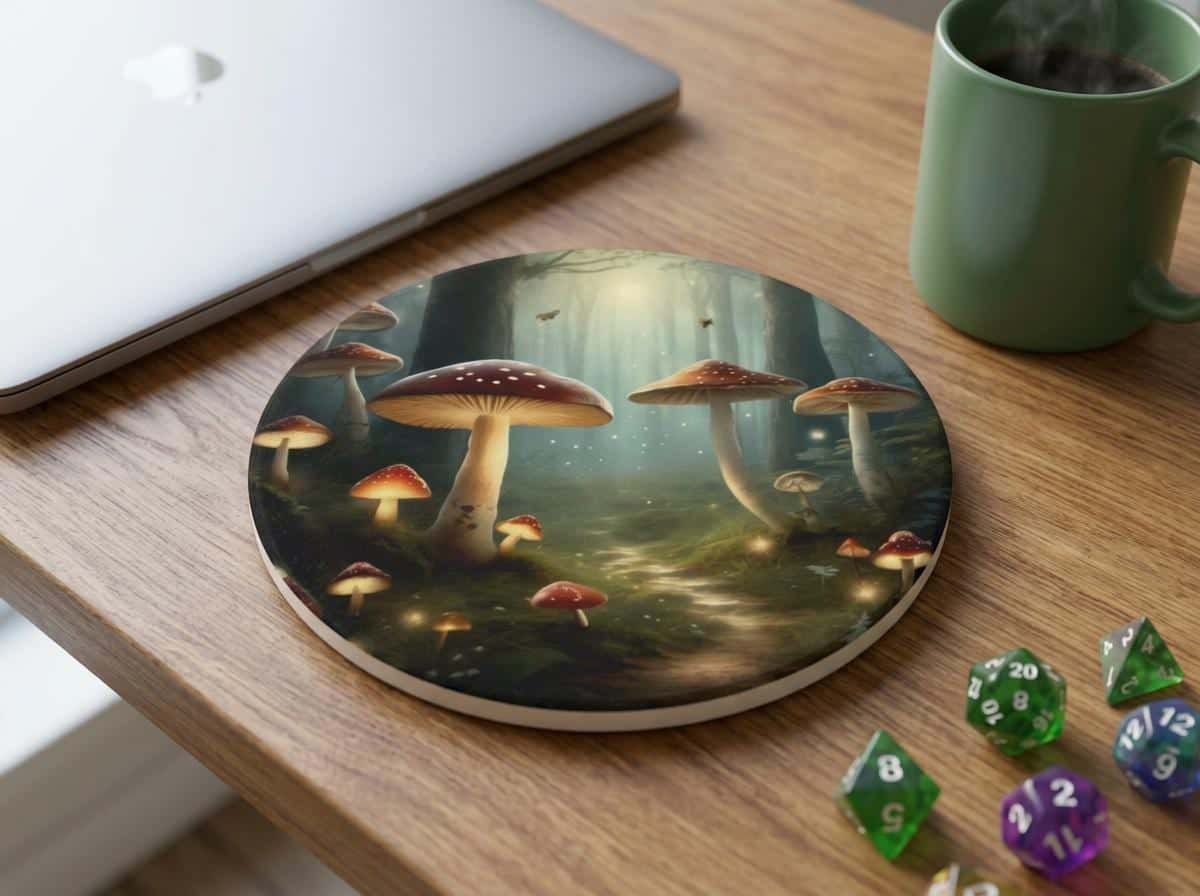
The best rolling accessories are only useful if they do not crowd out your character sheets and spell tracking cards. Dungeon Masters often keep a compact tower tucked just behind the DM screen to keep secret rolls hidden yet audible. Players should set rolling zones slightly forward on their dominant-hand side, paired with sturdy coasters to keep drinks safely away from the action.
- ✦Keep rolling trays on your dominant side for natural, uncrossed arm movements
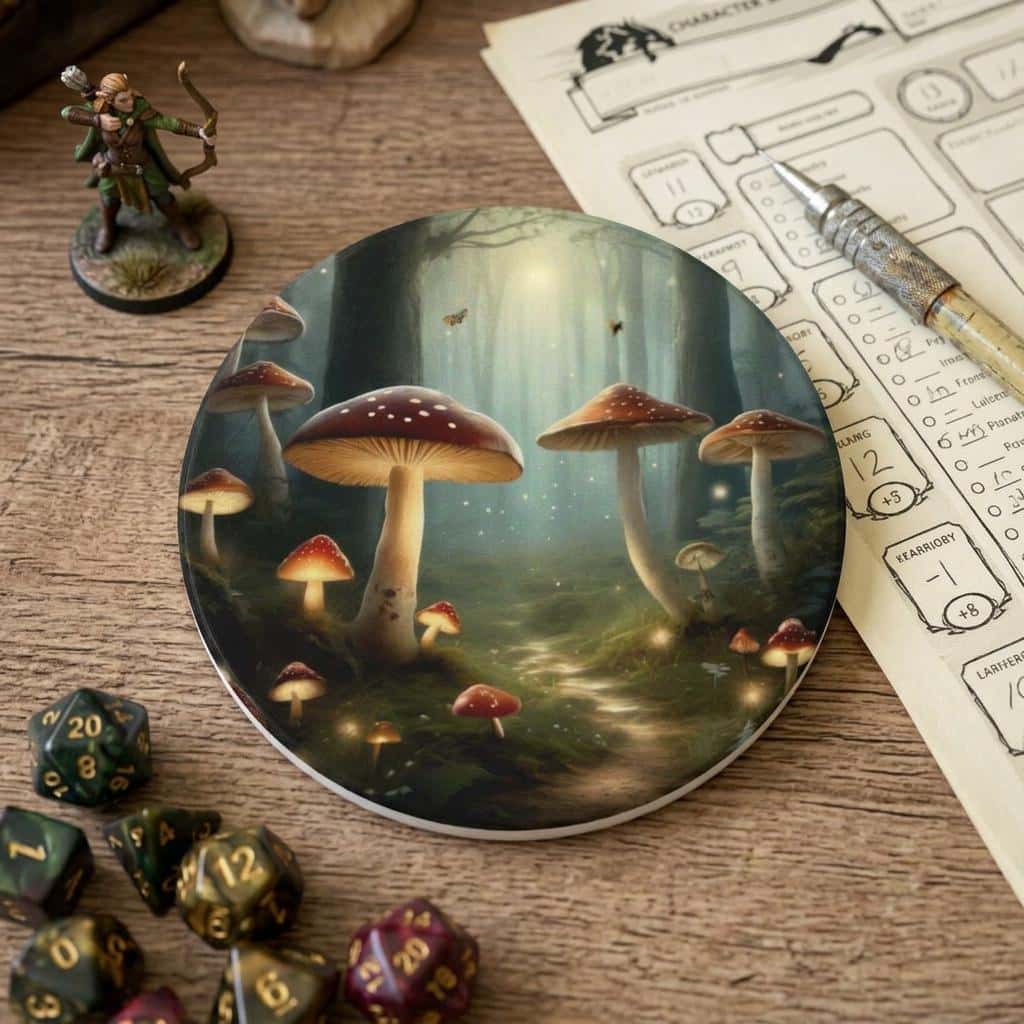
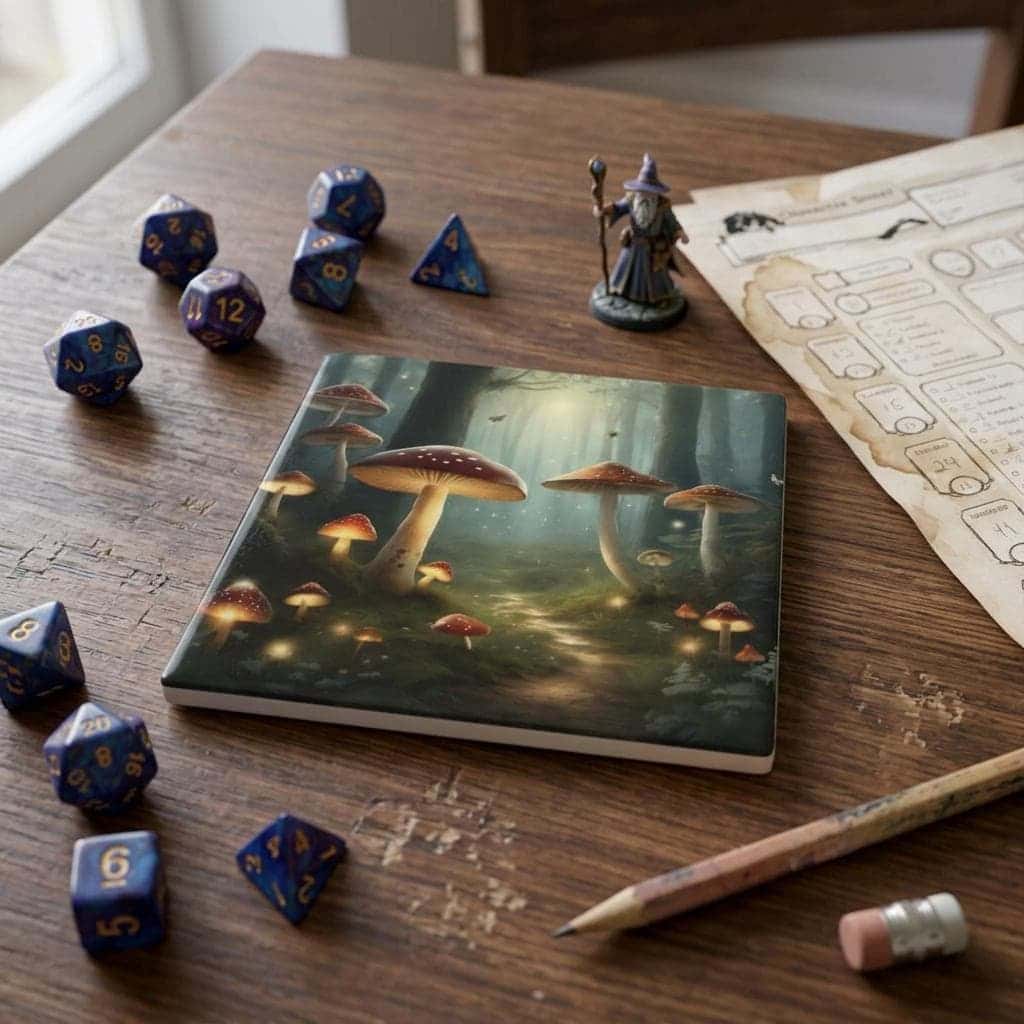
- ✦Pair trays with themed coasters to isolate drink sweat from character sheets
- ✦Tuck compact DM towers tight to your screen corner to preserve note space